



A nice-looking hotel website only does half the job. If guests still have to bounce over to Booking.com or email you to check a rate, you’re leaving direct bookings — and the commission you’d save on them — on the table.
The right hotel WordPress theme should let a visitor browse rooms, check real availability, see accurate pricing, and pay, all without leaving your site. Below are 9 themes worth shortlisting in 2026, based on what their current feature sets and ThemeForest listings actually offer — not just how the demo screenshots look.
Quick Comparison of Best Hotel WordPress Themes
| Theme | Best For | Page Builder | Booking Features |
|---|---|---|---|
| Almaris | Hotels, luxury resorts & multi-style sites | Elementor | Booking system, WooCommerce payments, seasonal pricing |
| Moonlit | Boutique hotels & modern resorts | Elementor | Room booking, WooCommerce payments, availability |
| Rivora | Luxury hotels & vacation properties | Elementor | Booking system, seasonal pricing, reservations |
| Hoteller | Hotels wanting a proven, established system | Elementor-compatible | Full booking system, seasonal pricing, payments |
| Hotel Master | Hotels needing serious room management | GoodLayers Builder | Room management, reservations, booking system |
| Kinsley | Resorts, apartments & boutique hotels | Elementor | Booking calendar, seasonal pricing, WooCommerce |
| Alloggio | Stylish hotels and apartments | Elementor | Accommodation layouts, booking-oriented features |
| CozyStay | Luxury hotels and vacation rentals | Elementor | Booking system, accommodation management |
| Sailing | Hotels, B&Bs and resorts | Visual builder tools | Reservations, payments, multi-currency |
A quick note before you scroll further: a comparison table like this can only tell you what a theme claims to do. Booking flow quality, how well seasonal pricing actually holds up with real rate rules, and how responsive support is — those only show up once you’re inside the theme. Test the demo, or better, install it on a staging site before you commit.
1. Almaris — the all-rounder
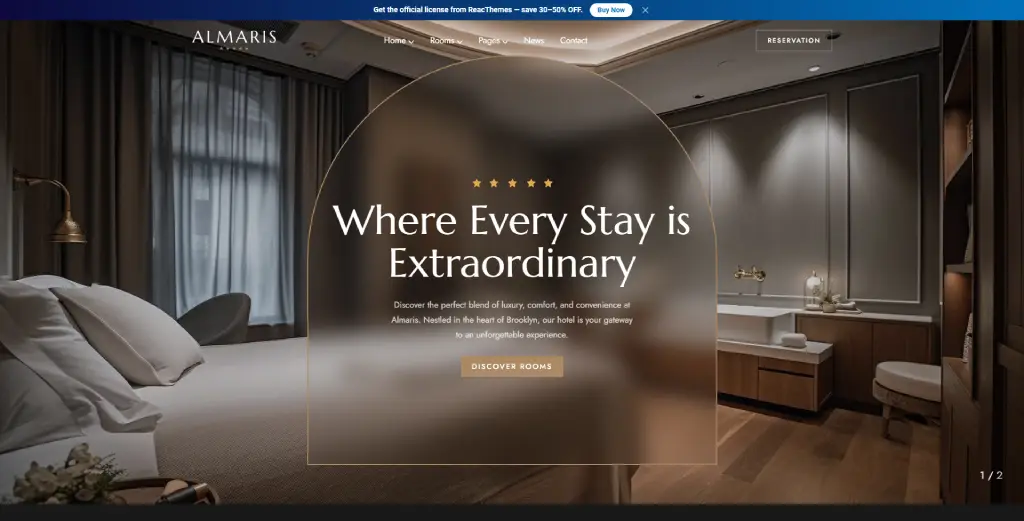
Almaris is built for hotels, resorts, villas, and vacation rental businesses that want to take reservations directly rather than routing everyone through a third-party OTA. It ships with 19+ pre-built hotel homepage layouts, so you’re not starting from a blank canvas whether you’re building for a boutique city hotel or a beachfront resort.
What it covers:
- Hotel and room booking system with availability management
- Seasonal pricing
- WooCommerce payment integration
- Room/accommodation listings and booking forms
- Elementor, responsive by default, one-click demo import
Where Almaris earns its “best overall” spot is variety — most hotel themes give you one visual identity and you work around it. Almaris gives you several, which matters if you’re an agency building for different clients or a hotel group with properties that shouldn’t all look identical.
Good fit for: luxury hotels, resorts, apartments, villas, guest houses, and agencies building hotel sites for multiple clients.
2. Moonlit — for properties that sell on atmosphere
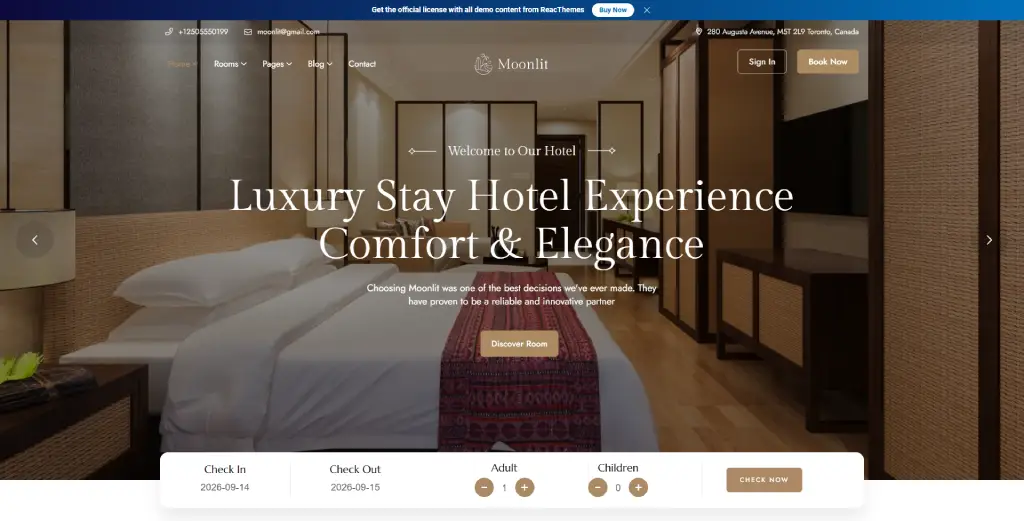
Moonlit leans harder into photography and mood than most hotel themes on this list, which makes sense — for boutique and resort properties, the visuals often do more selling than the copy. It’s built on Elementor and its current ThemeForest listing positions it specifically as a booking theme with WooCommerce payment support, not just a pretty template.
What it covers:
- Room listing and detail layouts, availability-focused booking
- WooCommerce payments
- Gallery sections, amenities, hotel services, testimonials
- Responsive, one-click demo import
If your rooms, pool, spa, or restaurant are genuinely photogenic, Moonlit’s spacious layouts give that content room to breathe instead of cramming it next to five widgets.
Good fit for: boutique hotels, spa and beach resorts, mountain lodges, small luxury properties.
3. Rivora — modern, with seasonal pricing done properly
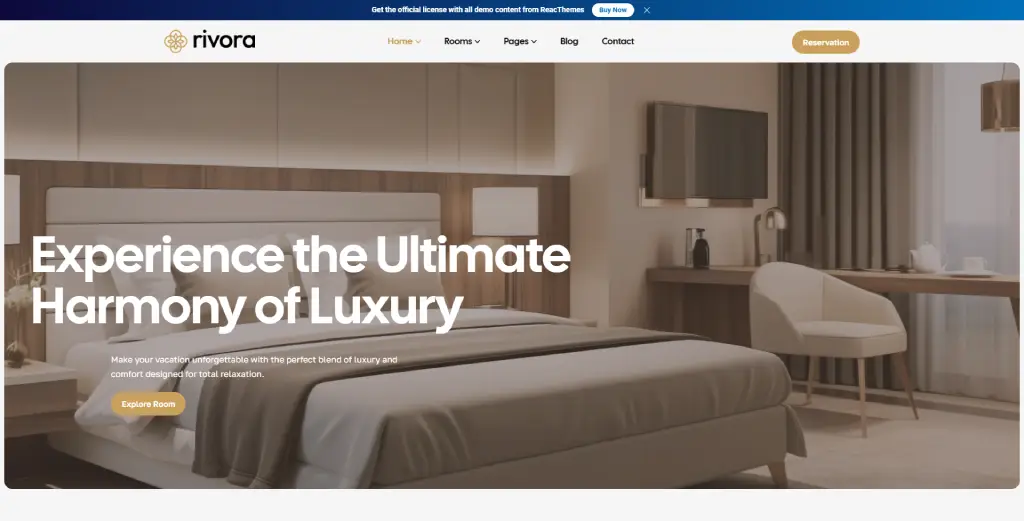
Rivora targets the same general space as Almaris and Moonlit but puts more weight on seasonal pricing — useful if your rates genuinely shift between weekday, weekend, and holiday periods rather than staying flat year-round.
What it covers:
- Booking system with seasonal room pricing
- Room listing and detail pages, availability-oriented UI
- Elementor, WooCommerce-friendly structure
- Works for hotels, resorts, vacation homes, and apartments
Worth flagging: “seasonal pricing” as a marketing bullet point can mean anything from a simple weekday/weekend toggle to genuinely flexible date-range rules. Check exactly how granular Rivora’s implementation is against your own rate calendar before assuming it’ll cover you.
Good fit for: resorts, vacation homes, apartments, villas with variable seasonal rates.
4. Hoteller — the established option
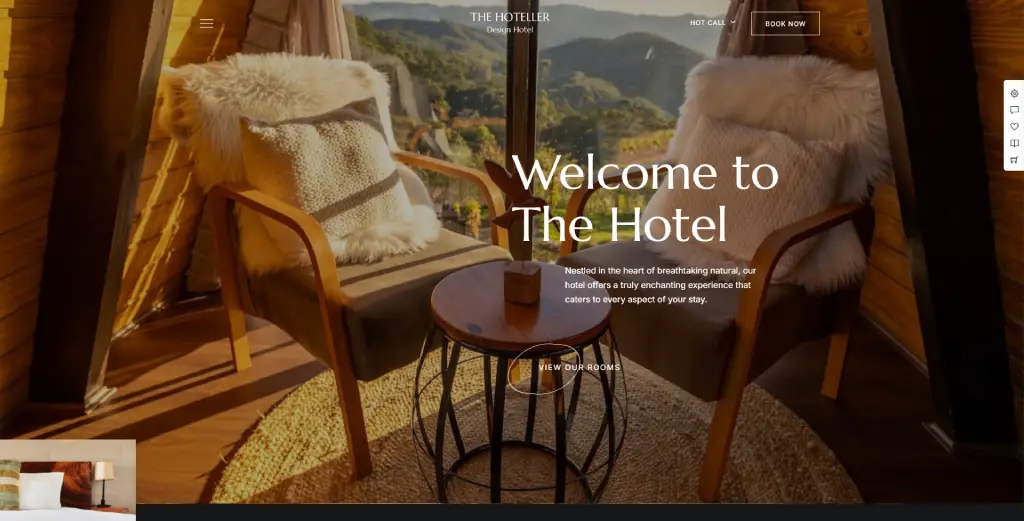
Hoteller has been around longer than most themes on this list, and it shows in the sales numbers — over 8,000 on ThemeForest. That track record matters if you’d rather bet on a theme with years of bug fixes and real-world use behind it than the newest release.
What it covers:
- Complete booking system with availability and seasonal pricing
- Multiple hotel/resort/apartment demos
- Room search, payment functionality, responsive design
The trade-off with older, popular themes: check the changelog before buying. A long sales history is only reassuring if the theme is still being actively maintained, not just still listed.
Good fit for: established hotels and agencies that want a mature theme with a long support history.
5. Hotel Master — built around operations, not just design
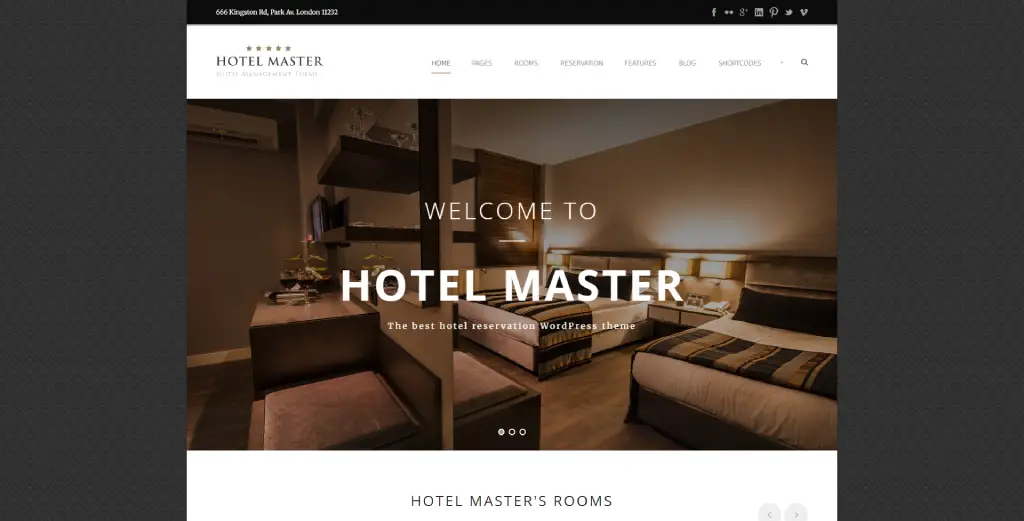
Hotel Master‘s pitch is different from the others here — it’s less about landing-page variety and more about room and reservation management once bookings start coming in. It runs on GoodLayers Builder rather than Elementor, which is worth noting if your team already has an Elementor workflow.
What it covers:
- Room management, reservation management, availability
- Hotel and resort layouts, accommodation management
If your priority is “can we actually manage 40 rooms and their bookings from this dashboard” rather than “does the homepage look luxurious,” this is the one to demo first.
Good fit for: hotels, hostels, and guest houses with enough rooms that manual management gets painful.
6. Kinsley — clean and Elementor-native
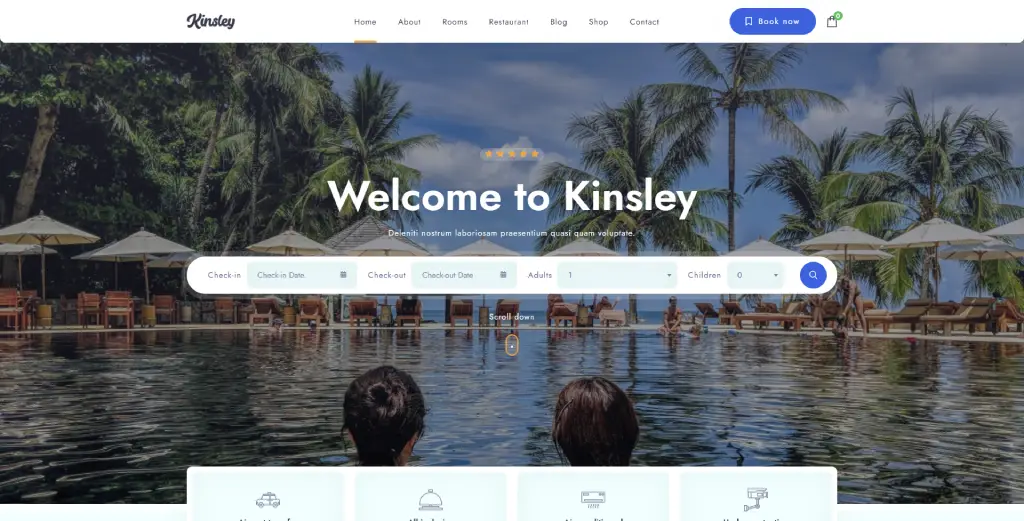
Kinsley combines a more contemporary, less “traditional luxury hotel” aesthetic with a solid booking feature set: booking system, calendar, seasonal pricing, reservation management, and WooCommerce support.
Good fit for: boutique hotels, apartments, and smaller resorts that want a modern look without the classic hospitality-brochure feel.
7. Alloggio — design-forward, booking-capable
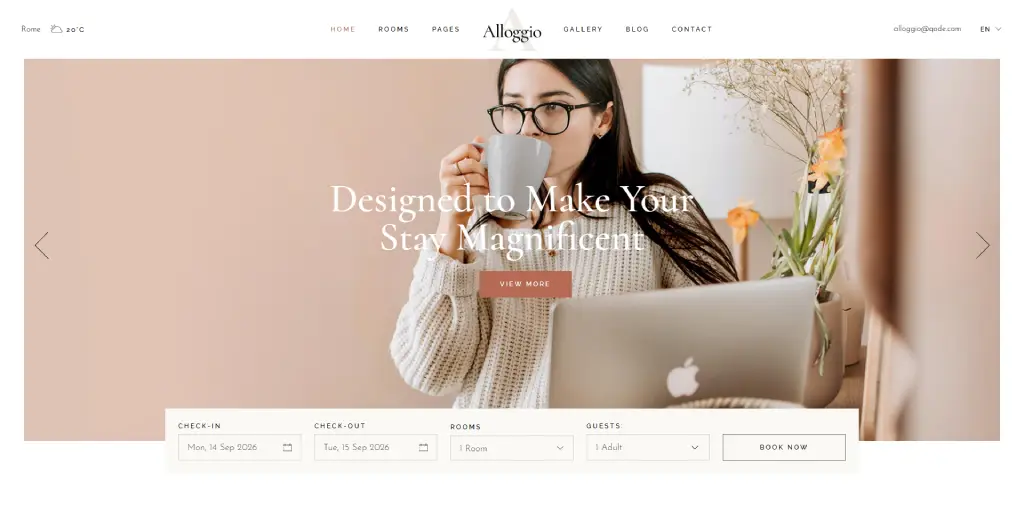
Alloggio‘s current listing leans on dedicated accommodation elements and layout variety for rooms and apartments, with Elementor compatibility underneath. It’s a good pick when branding and visual polish carry real weight for the property — think premium apartments or boutique hotels competing on look and feel as much as amenities.
Good fit for: luxury and boutique hotels, apartments, premium vacation properties.
8. CozyStay — upscale presentation at volume
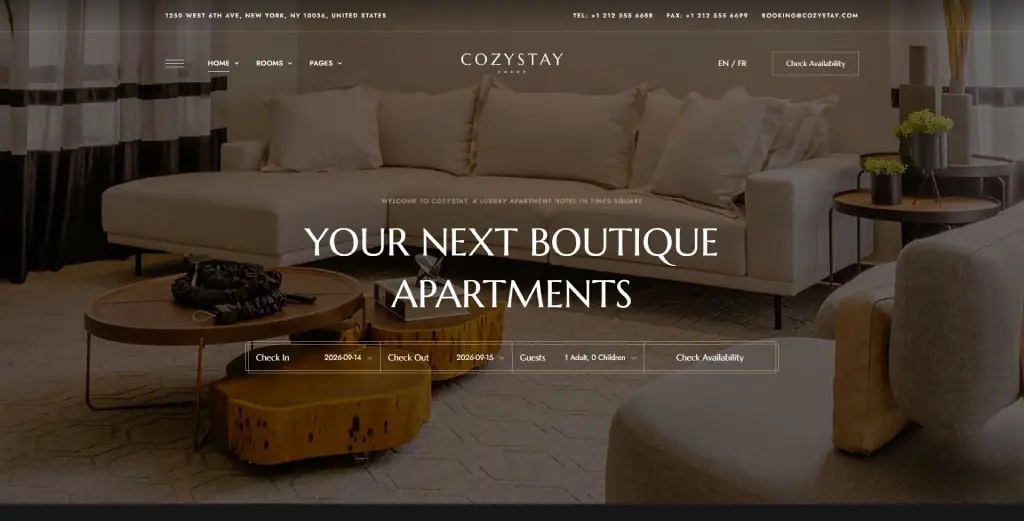
CozyStay has racked up thousands of ThemeForest sales and leans into large imagery, generous whitespace, and a high-end visual identity, while still including a working booking system and Elementor templates underneath.
Good fit for: luxury hotels, boutique properties, resorts, and vacation homes going for an upscale look.
9. Sailing — for international guests
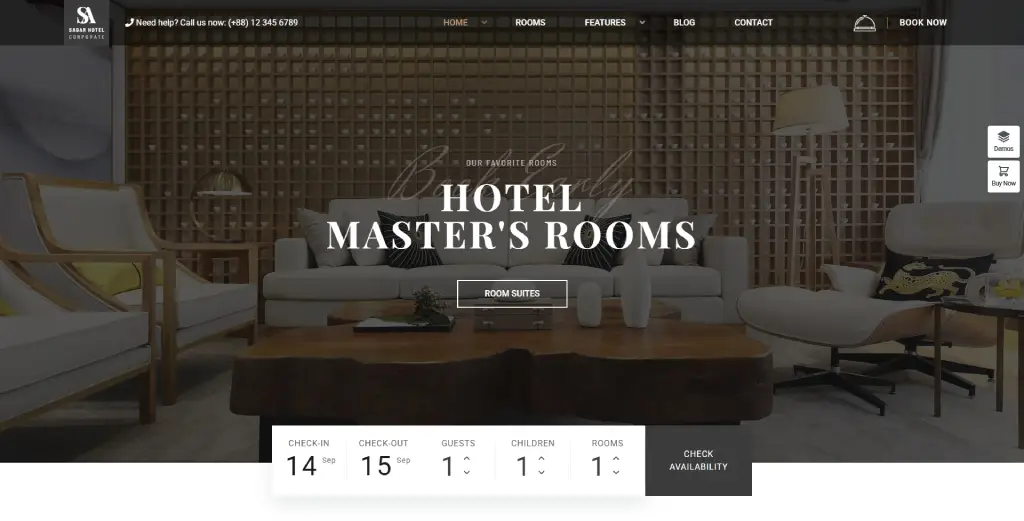
Sailing is the veteran of this list and its current listing specifically calls out multi-currency support and multiple WooCommerce payment gateways — a real differentiator if a meaningful share of your guests are booking from outside your home country.
Good fit for: hotels, resorts, and B&Bs with an international guest base where currency and payment method flexibility actually matter.
What actually matters when you’re choosing
Past the visual pitch, here’s what to check before buying any of these:
A short booking path. Dates → availability → room → guest info → payment. Every extra step between “interested” and “booked” is a chance for someone to bail and book on Booking.com instead.
Real availability management, not just a booking form that emails you. Without it, you’re manually confirming every request and risking double bookings.
Seasonal pricing that matches your actual rate structure — weekends, holidays, high/low season, special events. As mentioned above, don’t assume a “seasonal pricing” checkbox on a features list matches how your rates actually work; check it against your calendar.
Payments that don’t require extra plugins you didn’t budget for. WooCommerce compatibility usually means access to a broad payment gateway ecosystem, but confirm which gateways are actually supported before assuming yours is covered.
Mobile booking that doesn’t fight the user. A lot of hotel research and booking happens on a phone. Tiny date pickers and multi-step forms that don’t fit a small screen will cost you conversions regardless of how good the desktop demo looks.
Editing without needing a developer. Elementor-based themes (Almaris, Moonlit, Rivora, Kinsley, Alloggio, CozyStay) make it realistic for hotel staff to update a headline or swap a photo themselves.
Room pages with enough information to decide — photos, max guests, bed type, size, amenities, price, availability, and policies, plus a clear booking CTA.
Speed. Hotel photography is heavy by nature. Compress and serve images in WebP/AVIF where you can — it affects both SEO and how many people stick around long enough to book.
Why bother with direct booking at all
OTAs like Booking.com are still a legitimate acquisition channel — they put your property in front of people who’d never have found your site otherwise. But every booking routed through them costs you a commission, and you don’t own the relationship with that guest afterward.
A returning guest who already knows your hotel shouldn’t have to rediscover you through an OTA every time. Your own site, with a real booking system behind it, lets you capture that repeat business directly. Realistically, most hotels end up running both — OTAs for reach, direct booking for margin and repeat guests.
Which one should you actually pick
If you want the broadest mix of layouts, Elementor flexibility, and booking features in one package, Almaris is the safest starting point. If your property sells on photography and atmosphere, Moonlit fits better. If seasonal pricing and a modern resort look matter most, look at Rivora.
For narrower needs: Hoteller if you want a proven, long-running booking setup; Hotel Master if room/reservation management matters more than design variety; Kinsley for a clean, modern Elementor build; Alloggio or CozyStay if visual polish is the priority; Sailing if multi-currency and payment flexibility are non-negotiable for an international guest base.
Whichever you pick, the theme is only half the equation — test the actual booking flow as a guest would experience it before you commit. A theme that looks great in the demo but adds friction at checkout will quietly cost you bookings every month it’s live.
FAQ
What’s the best WordPress theme for a hotel website?
Almaris is the strongest all-around pick — multiple layouts, Elementor, a booking system, and WooCommerce payments. Moonlit and Rivora are close alternatives depending on the visual style you want.
Can I build a hotel booking website with WordPress?
Yes. Guests can browse rooms, check availability, submit reservations, and — depending on the booking solution — pay online, all through WordPress.
Does a hotel theme need a built-in booking system?
Not strictly, but it saves you from sourcing and configuring a separate booking plugin and hoping it plays nicely with your theme.
Can guests pay online through these themes?
Yes, most integrate with WooCommerce or a similar payment layer, giving you access to standard payment gateways.
Can I use Elementor for a hotel booking site?
Yes — Almaris, Moonlit, Rivora, and Kinsley are all Elementor-based or Elementor-compatible.
Are these themes usable for vacation rentals, not just hotels?
Several are, including Rivora and CozyStay — both are marketed for vacation homes and apartments as well as traditional hotels.
Why bother with direct bookings when OTAs already bring guests?
Direct bookings skip the OTA commission and let you own the guest relationship, which matters most for repeat visitors. Most hotels run both channels rather than choosing one.